
Artificial Intelligence
What is an AI webmaster? The human managing AI at work
Using AI is easy. Connecting it safely to company data, systems and decisions is a different job. That is where the AI webmaster is beginning to emerge.
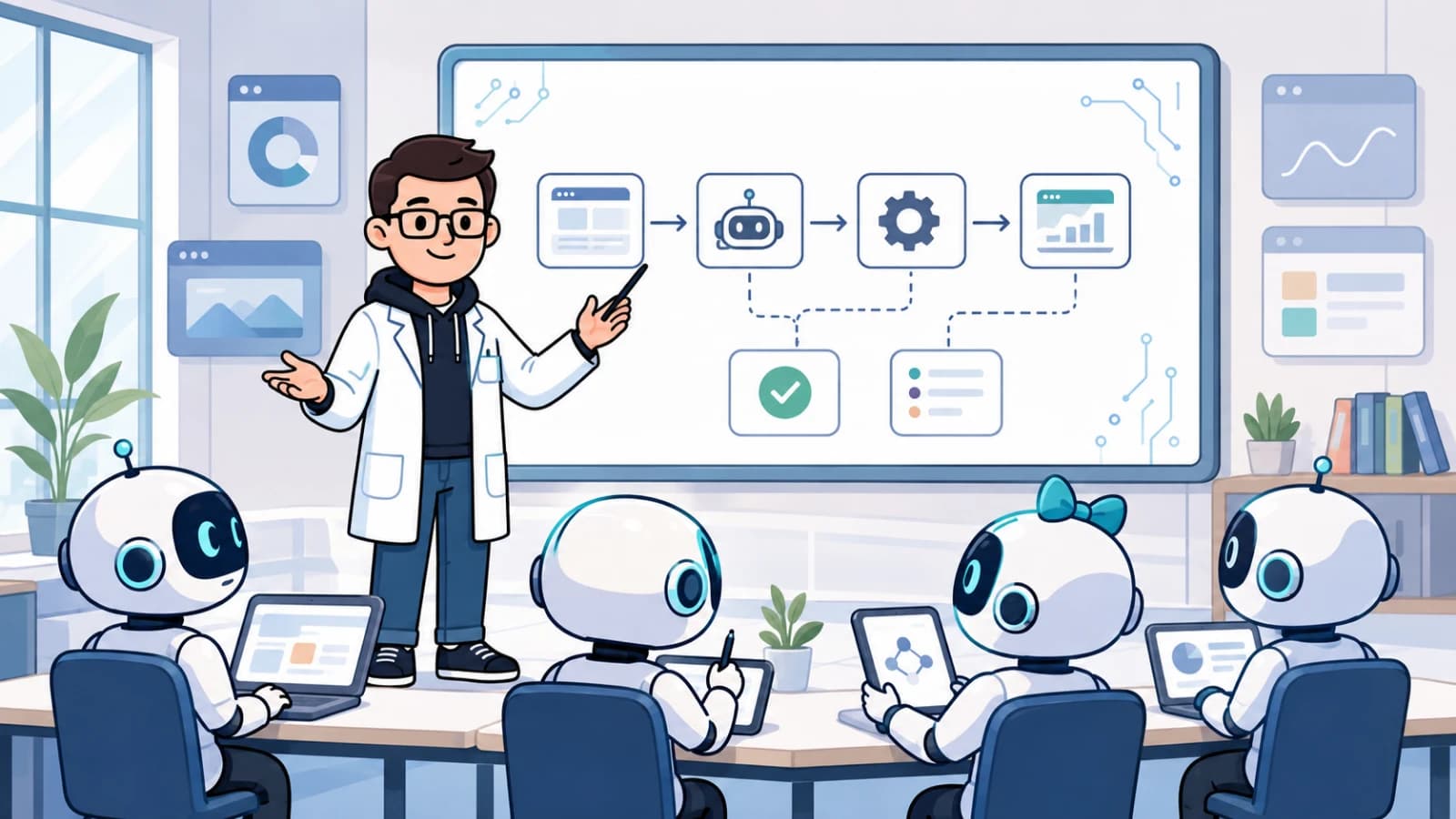
What is an AI webmaster?
An AI webmaster is an advanced operator who builds, connects and manages the AI systems used inside a business. They do more than write prompts. They decide what AI can access, which tasks it can complete, when a human must approve its work and how its performance will be checked.
The name borrows from the original webmaster: the person who once looked after the whole website rather than one isolated part of it. The modern version has a wider brief. They may oversee automated workflows, development agents, business data, reporting, SEO activity and paid campaigns across the organisation.
It is not yet a standard job title. It is a useful name for a role many businesses are beginning to need.
Why this role is beginning to appear
The gap is no longer between people who use AI and people who do not. It is between occasional users and advanced operators who can redesign work around it.
Microsoft described its most advanced group of AI users as Frontier Professionals in its 2026 Work Trend Index. They use agents for complex, multi-step work, redesign workflows and help create shared AI standards. The terminology will continue to change, but the practical need is already clear.
Once AI moves from individual prompts into shared systems, somebody must take ownership of how it works.
Using AI is not the same as managing AI
Most people now know how to ask an AI tool to draft an email, summarise a document or suggest an idea. That can save time, but it remains an isolated task. The person copies information in, receives an answer and decides what to do with it.
An AI webmaster works at the next level. They connect AI to the places where work actually happens: the website, CRM, analytics, advertising accounts, project management system, codebase and internal data.
They may build a workflow that collects information from several systems, checks it against agreed rules and produces a recommended action. They also decide whether that action can happen automatically or must wait for approval. A casual AI user asks for an output. An AI webmaster designs and manages a working system.
What does an AI webmaster actually do?
The role sits between operations, marketing, development and management. It does not require one person to be the best specialist in every area. It requires someone who understands how the areas connect and where automation can safely remove friction.
This is less about installing one impressive tool and more about designing a dependable operating system for assisted work.
- Map repetitive business processes and identify where AI or conventional automation fits.
- Connect approved data sources, software platforms and APIs.
- Create instructions, rules and limits for AI agents.
- Decide which actions require human approval.
- Monitor accuracy, cost, security and business impact.
- Keep records of what an agent recommended or changed.
- Improve workflows as the business, data and AI models change.
- Coordinate specialist agents without surrendering human accountability.
AI webmasters can make development faster without removing developers
Software development is one of the clearest examples. An AI coding agent can inspect a codebase, trace a fault, propose a change, write tests and prepare work for review. It can also help document systems, compare versions and complete repetitive refactoring.
That does not make technical judgement optional. Someone still needs to define the requirement, protect production systems, review the code and decide whether the change solves the real problem.
The AI webmaster creates the process around the agent. They make sure it works in the correct environment, receives only the access it needs, follows the project standards and cannot quietly publish risky changes. The developer remains responsible for the result, but spends less time on mechanical investigation and repetition.
The value is not simply faster code. It is a shorter route from a clearly defined problem to a tested, reviewable solution.
AI can organise company data before people make decisions
Businesses rarely suffer from a complete lack of data. They suffer from information spread across analytics platforms, spreadsheets, inboxes, call notes, advertising accounts and CRMs.
An AI webmaster can create controlled workflows that bring relevant information together and make it easier to use. An agent might classify new enquiries, match them to a service, detect missing fields, summarise customer objections or identify records that need attention.
The safest systems do not treat every AI output as a fact. They preserve the source, show the evidence and flag uncertainty. A person can then confirm the conclusion or correct it before the information affects a customer, report or commercial decision.
This is where AI becomes genuinely useful: not as a new place to store more information, but as a layer that helps organise the information the business already has.
Can AI agents manage SEO?
AI agents can already support a large part of the SEO workflow. They can monitor Search Console and analytics data, identify declining pages, detect technical problems, compare search intent, find internal-link opportunities and prepare content briefs or recommended updates.
With the right access, an agent could also prepare metadata, schema or page changes for review. What it should not do is publish large volumes of unverified content or make site-wide changes without controls.
Google guidance on generative AI content makes the same distinction: AI can support research and structure, but generating many pages without adding value may breach spam policies. The method is not the advantage. Accuracy, quality and relevance still determine whether the result deserves to be published.
SEO decisions depend on context. A page may have less traffic because demand changed, because rankings fell or because the business deliberately stopped promoting a service. An AI system can identify the pattern, but a person must confirm what the pattern means.
- Monitor: AI checks agreed data and detects meaningful changes.
- Recommend: AI explains the evidence and proposes an action.
- Approve: a human reviews, edits or rejects the proposal before it goes live.
Can AI manage PPC campaigns?
AI can help monitor search terms, budgets, conversion quality, landing pages, creative performance and unusual changes across paid campaigns. It can produce daily summaries, identify wasted spend and prepare recommendations much faster than a person manually moving between accounts and reports.
However, advertising platforms already contain their own automation, and their incentives do not always match the commercial reality of the advertiser. A platform may optimise towards a recorded conversion even when the tracking is incomplete or the resulting leads are poor.
An independent AI workflow can add a useful second layer of analysis, particularly when advertising data is compared with CRM outcomes and real sales. It may recommend a negative keyword, budget shift or new advert, but a campaign manager should review the evidence and approve material changes.
Humans set the commercial objective. AI watches more signals, more often. The final responsibility stays with the business and its specialists.
The best AI automation has different levels of authority
Not every task carries the same risk, so not every agent needs the same freedom. A practical system can use levels of authority that match the consequence of being wrong.
High-impact work should normally remain behind approval. This includes publishing content, changing advertising budgets, editing production code, sending sensitive customer communications or deleting records.
Lower-risk work may be suitable for controlled automation. Examples include categorising an enquiry, preparing a weekly report, opening a task when a website error is detected or drafting a response for a person to review.
The aim is not maximum automation. It is the right level of automation for the consequence of being wrong.
- Observe: the agent reads data, monitors performance and reports what it finds.
- Recommend: the agent prepares an action but cannot execute it.
- Act within limits: the agent completes a narrow, reversible task under agreed rules and records what it changed.
A business does not need ten disconnected AI tools
One of the early mistakes in business AI adoption is allowing every team to add separate tools without a shared plan. The result can be duplicated costs, inconsistent data, unclear responsibility and automations that nobody fully understands.
An AI webmaster provides ownership. They maintain a clear view of which systems are connected, what data moves between them, which agents are active and who approves their work. They can also remove workflows that consume time or money without producing a useful outcome.
This makes the role partly technical and partly operational. The best person may be a developer, digital lead, automation specialist or technically capable marketer. Their job title matters less than their ability to understand the full journey and remain accountable for it.
Do you need an AI webmaster now?
Probably not if your use of AI is limited to occasional drafting and research. In that case, clear usage rules and staff training may be enough.
The role becomes valuable when AI begins to touch live systems, shared data or repeatable business processes. Warning signs include several unconnected AI subscriptions, staff building private automations, agents accessing customer information, automated content being published without review or nobody knowing why an AI-supported decision was made.
Start with one process that is repetitive, measurable and currently slow. Define the desired outcome, the data required, the risks and the approval point. Then build the smallest workflow that can prove its value.
AI should make good people more capable and good processes faster. An AI webmaster helps ensure that it does.
FAQ: What is an AI webmaster?
An AI webmaster is a person who builds, connects and manages AI agents and automation across a business. They control access, define workflows, set approval points and monitor the results.
FAQ: Is an AI webmaster the same as a traditional webmaster?
No. A traditional webmaster primarily manages a website. An AI webmaster may support the website but can also manage AI-assisted development, business data, reporting, SEO, PPC and internal operations.
FAQ: Can an AI webmaster replace an SEO or PPC specialist?
No. AI can monitor data, detect patterns and prepare recommendations, but specialists still provide strategy, commercial context, creative judgement and accountability. The strongest model uses AI for scale and people for decisions.
FAQ: Should AI be allowed to make changes automatically?
Only for narrow, low-risk and reversible tasks with clear limits and logging. Publishing content, changing budgets, editing production systems and other high-impact actions should normally require human approval.
FAQ: What skills does an AI webmaster need?
They need a working understanding of automation, AI agents, data, APIs, security and the business processes being improved. They also need judgement: knowing what should be automated is as important as knowing how.
Want to find where AI could genuinely help your business?
We start with the process, the data and the commercial problem, not the latest tool. Marketing.clinic designs connected websites, software, CRM systems, automation and AI workflows with clear human control at every important decision.
Want this checked on your own website?
Our free scan reviews the fundamentals covered here — and a specialist reviews the findings before anything is sent to you.